
Planning
Pickleball, Tennis and Basketball Court Dimensions: A Complete Size Guide
Planning a backyard court starts with space. Here are the standard dimensions for pickleball, tennis and basketball courts, plus how much total room each one needs.
6 min read
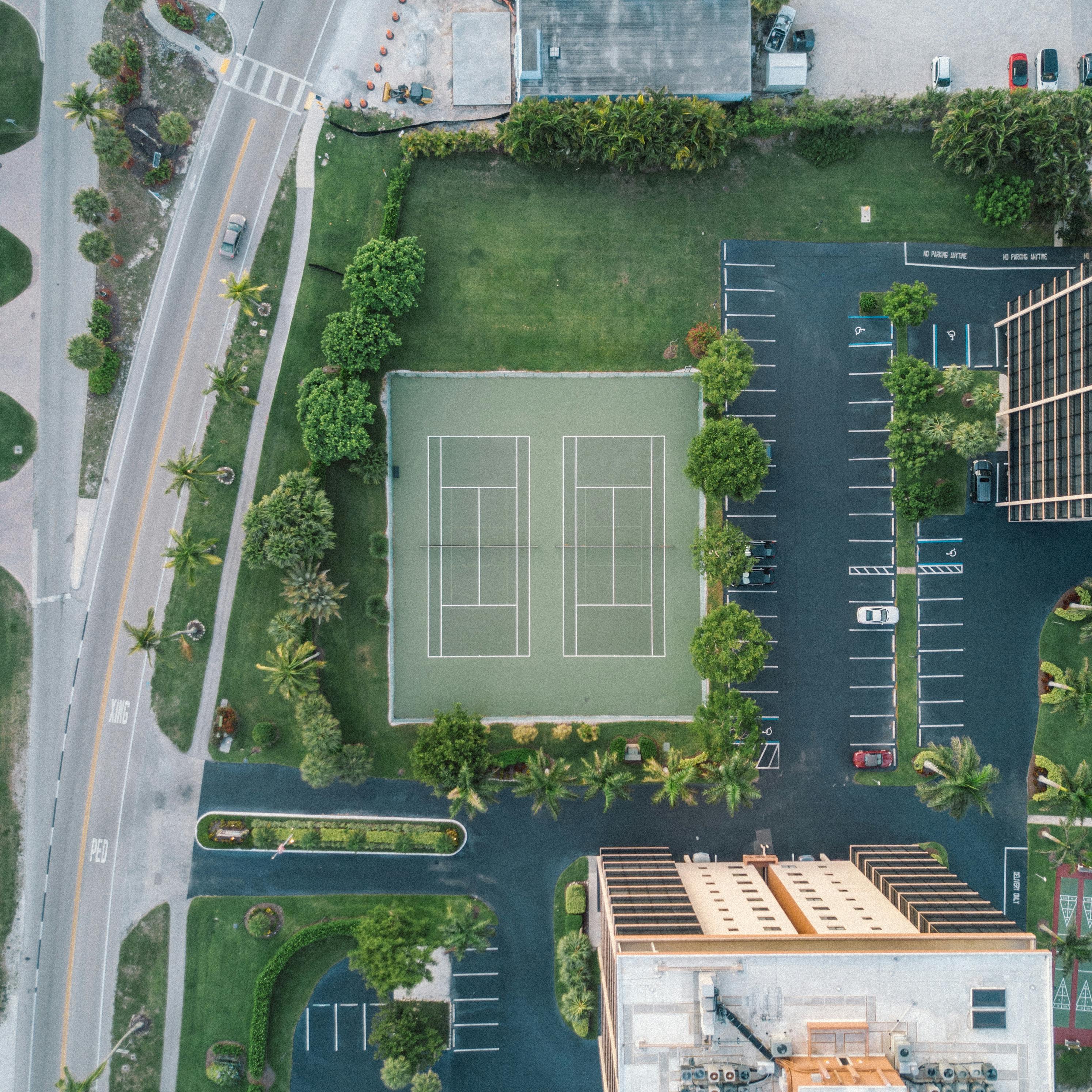
The first question in any court project is simple: will it fit? Below are the standard dimensions for the three most popular backyard courts, along with the extra space players need around the lines.
Pickleball court dimensions
Playing area: 20 feet wide by 44 feet long, for both singles and doubles
Non-volley zone (the kitchen): 7 feet from the net on each side
Net height: 36 inches at the sidelines, 34 inches at the center
Recommended total space: about 30 by 60 feet for recreational play, or 34 by 64 feet if you want extra room to move
Pickleball is the easiest court to fit in a typical backyard, which is a big reason for its popularity.
Tennis court dimensions
Doubles playing area: 36 feet wide by 78 feet long
Singles playing area: 27 feet wide by 78 feet long
Net height: 3.5 feet at the posts, 3 feet at the center
Recommended total space: about 60 by 120 feet, which allows room to run behind the baseline and beside the sidelines
A full tennis court needs a large, fairly level lot. If space is tight, a multi-sport court with pickleball lines is a popular alternative.
Basketball court dimensions
Full court (NBA and college): 94 feet long by 50 feet wide
Full court (high school): 84 feet long by 50 feet wide
Half court: a regulation half court is about 47 by 50 feet
Backyard half courts: often built anywhere from about 30 by 30 feet up to 30 by 50 feet, depending on the space
Rim height: 10 feet
Free throw line: 15 feet from the backboard
Most homeowners choose a half court sized to their yard. Even a compact pad gives plenty of room for shooting and one-on-one games.
Quick comparison
Pickleball: 20 x 44 ft lines, about 30 x 60 ft total
Tennis: 36 x 78 ft lines, about 60 x 120 ft total
Basketball half court: about 30 x 30 ft to 47 x 50 ft
Other things to plan for
Slope and drainage. Courts need a slight slope so water runs off. Uneven yards may need grading.
Fencing. Fences keep balls in and add to the footprint.
Sun direction. Running the court north to south helps reduce sun glare for players.
Access. Equipment needs a path to reach the build site.
Setbacks and HOA rules. Check property lines and any neighborhood requirements.
Not sure what fits?
We will look at your property, measure the space and help you choose a layout that works. Explore pickleball, tennis and basketball courts, or request a free quote.
We design, build, repair, resurface and clean pickleball, tennis, basketball and multi-sport courts for homes, schools and clubs across Dallas Fort Worth. Have a question about your court? Ask us for a free quote.
Planning
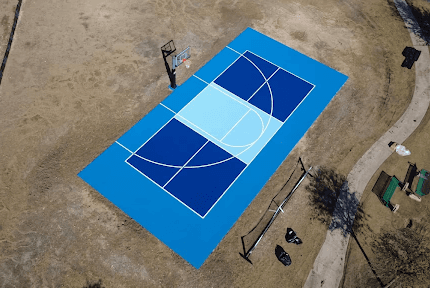
Backyard Basketball Court Guide: Half Court Sizes and Planning Tips
Thinking about a basketball court at home? Here are common half court sizes, regulation dimensions and the planning details that make a backyard court work.
6 min read
Planning
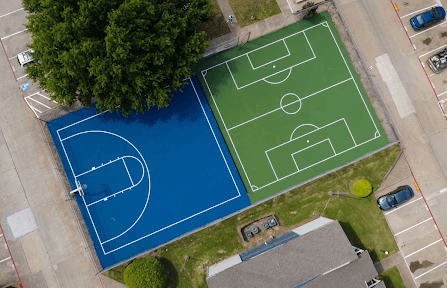
Court Surfaces Explained: Acrylic, Concrete, Asphalt and Tiles
What is a sport court actually made of? Here is how acrylic coatings, concrete and asphalt bases and modular tiles compare for outdoor courts in Texas.
6 min read
Planning
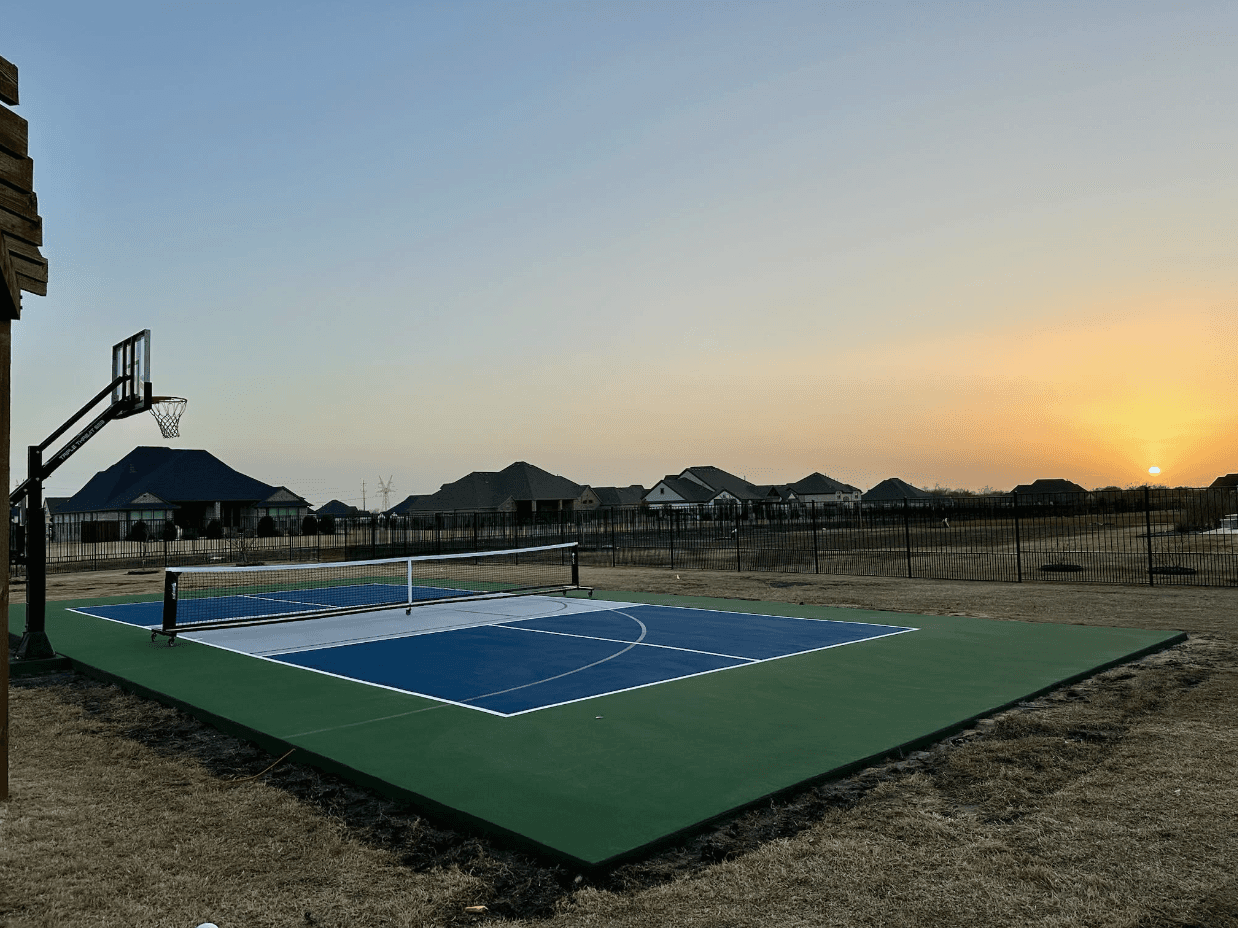
Tennis and Pickleball Court Lighting: A Homeowner's Guide
Court lighting lets you play after work and on cooler summer nights. Here is what to know about fixtures, placement, neighbors and local rules before you add lights.
5 min read