
Planning
Tennis and Pickleball Court Lighting: A Homeowner's Guide
Court lighting lets you play after work and on cooler summer nights. Here is what to know about fixtures, placement, neighbors and local rules before you add lights.
5 min read
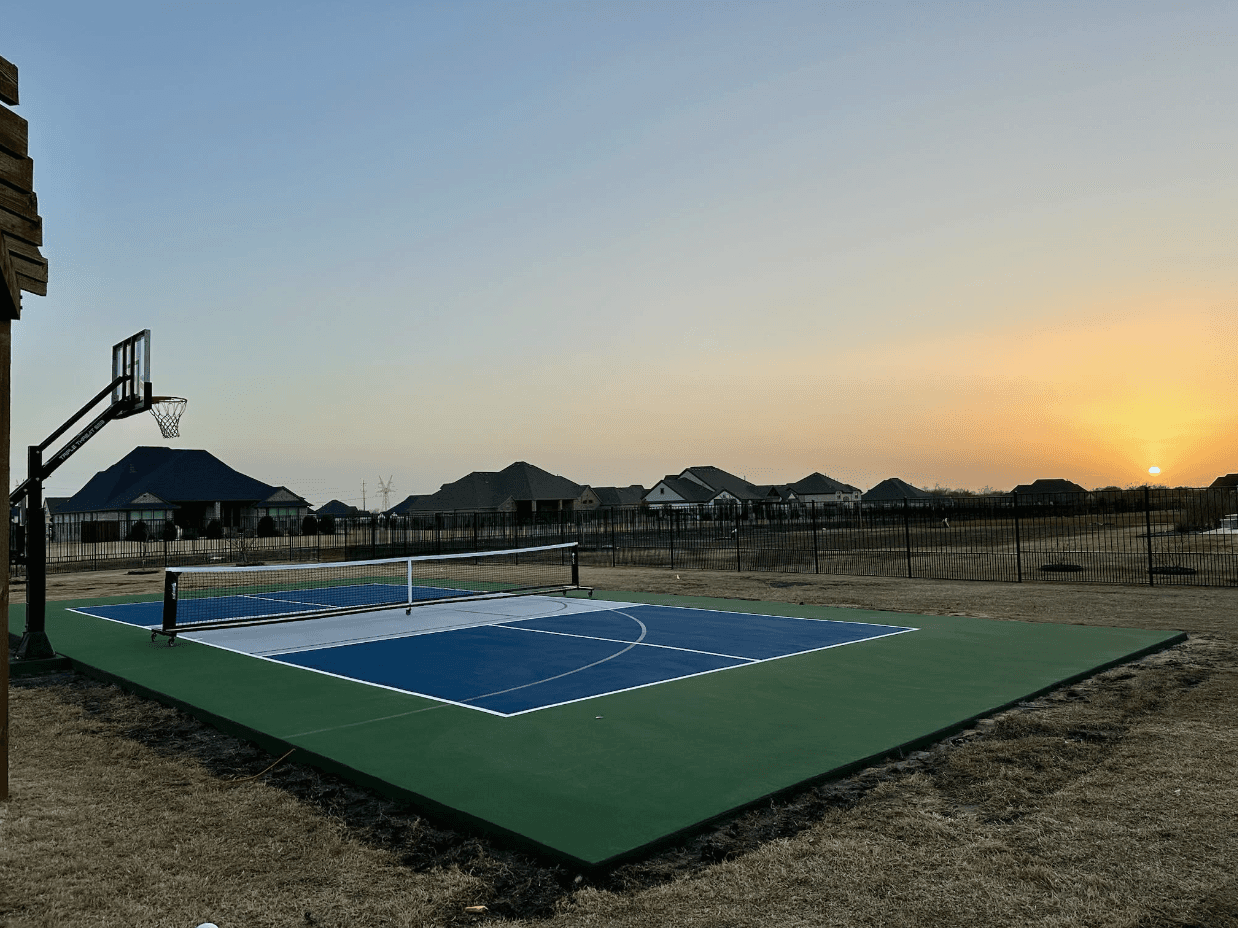
In North Texas, the best time to play in summer is often after the sun goes down. Court lighting turns your court into an evening space and gets far more use out of your investment.
Why add lights
Play after work and school during shorter fall and winter days
Avoid the hottest part of summer afternoons
Host evening games with friends and family
Improve safety on and around the court
LED is the standard
Most new court lighting uses LED fixtures. LEDs use less energy than older metal halide lights, turn on instantly, last longer and give cleaner, more even light. Many fixtures are designed specifically for sport courts to light the playing area while limiting spill.
Placement matters more than brightness
Even coverage. The goal is consistent light across the whole court, without dark corners or bright hot spots.
Pole position. Poles usually sit outside the playing area along the sides, so players are not looking straight into fixtures.
Pole height. Taller poles spread light more evenly and reduce glare at eye level.
Fixture angle. Lights aimed down at the court reduce glare for players and spill into neighboring yards.
Be a good neighbor
Light spilling into nearby homes is one of the most common complaints about court lighting. Shielded fixtures, careful aiming and sensible hours help keep neighbors happy.
Check the rules first
HOA rules. Many neighborhoods regulate pole height, fixture type and hours of use.
City requirements. Some cities have lighting ordinances or require permits for electrical work.
Electrical service. A licensed electrician should confirm your home's service can support the lights.
Smart controls
Timers, switches near the court and app-based controls make lights easy to use and help avoid leaving them on by accident. Some homeowners set an automatic shutoff time to match HOA quiet hours.
Plan lighting from the start
Adding lights is easiest during construction, when conduit and pole footings can be placed before the surface goes down. Lights can be added to existing courts too, but planning ahead saves time and cost.
Building a new court or upgrading an existing one? Ask us about lighting options, or explore our tennis and pickleball courts.
We design, build, repair, resurface and clean pickleball, tennis, basketball and multi-sport courts for homes, schools and clubs across Dallas Fort Worth. Have a question about your court? Ask us for a free quote.
Planning
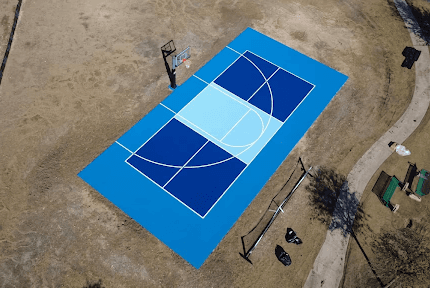
Backyard Basketball Court Guide: Half Court Sizes and Planning Tips
Thinking about a basketball court at home? Here are common half court sizes, regulation dimensions and the planning details that make a backyard court work.
6 min read
Planning
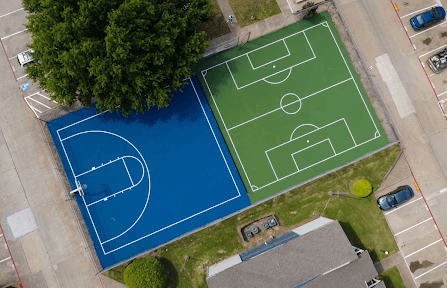
Court Surfaces Explained: Acrylic, Concrete, Asphalt and Tiles
What is a sport court actually made of? Here is how acrylic coatings, concrete and asphalt bases and modular tiles compare for outdoor courts in Texas.
6 min read

Planning
How to Choose Court Colors for Pickleball, Tennis and Basketball
Court colors affect how your court looks, how well you can see the ball and how hot the surface gets. Here is how to pick a combination you will love.
5 min read