
Repair
Court Resurfacing vs. Rebuild: Which Does Your Court Need?
Cracks, faded color and puddles often can be fixed without building a new court. Here is how to tell whether resurfacing will fix the problem or a full rebuild makes more sense.
5 min read
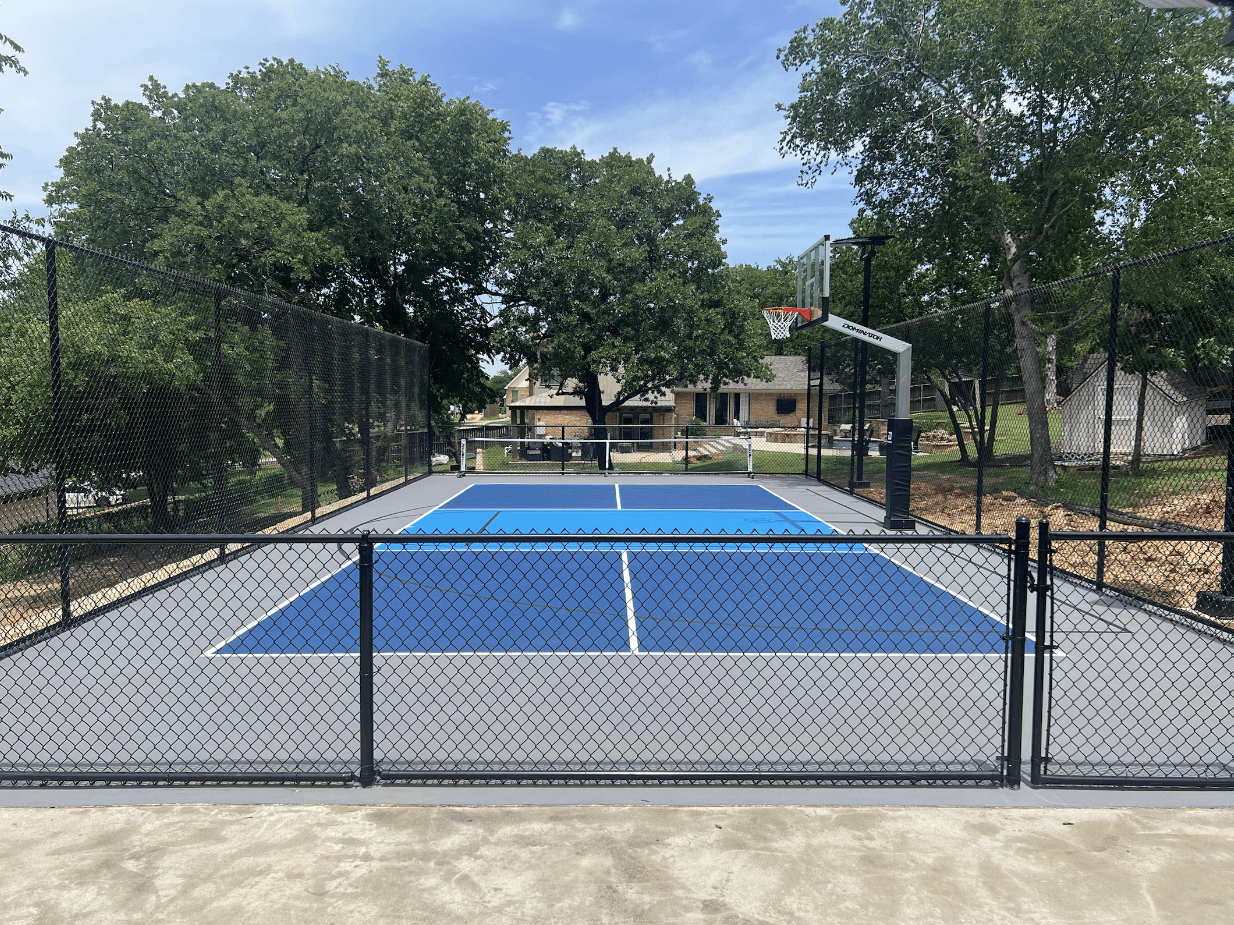
An older court that looks worn out is not always a lost cause. In many cases, a resurfacing job brings it back for a fraction of the cost of starting over. In others, the problems run deeper than the surface, and new paint only hides them for a season. Here is how to tell the difference.
What resurfacing includes
Resurfacing works on top of the existing base. A typical resurfacing project includes:
Cleaning the court and removing loose material
Filling and repairing cracks
Leveling low spots where water collects
Applying new acrylic coatings in the colors you choose
Painting fresh, accurate line markings
When the slab underneath is solid, resurfacing restores grip, color and ball response, and the court plays like new again.
Signs resurfacing will do the job
Faded or chalky color. Sun breaks down acrylic coatings over time. This is a surface issue.
Thin, hairline cracks. Small cracks that have not shifted can usually be filled and coated over.
Slick or worn spots. Areas that lost their texture can be recoated for better traction.
Minor puddling. Shallow low spots can often be patched and leveled during resurfacing.
You want new lines. Adding pickleball lines or changing colors can be done during resurfacing.
Signs you may need a rebuild
Wide or shifting cracks. Cracks that keep reopening, grow each year or have one side higher than the other usually point to movement in the base.
Heaving or sinking sections. North Texas clay soil expands when wet and shrinks when dry. If the base was not built for that movement, the slab can lift or settle.
Widespread drainage problems. If large areas hold water after every rain, the court may not have the slope it needs.
Crumbling asphalt. Asphalt that breaks apart at the edges or surface needs more than a coating.
You want a different size or layout. Expanding a court or changing its footprint means new construction.
Why the base matters most
The playing surface is only as good as what is underneath it. A well-built base with proper drainage can be resurfaced several times over its life. A base with structural problems will keep cracking no matter how many coats go on top. That is why every repair project should start with an honest look at the slab underneath.
How we help you decide
When you contact Total Court Construction, we inspect the court in person, look at the cracks, drainage and base, and tell you plainly which option makes sense. If resurfacing will solve the problem, we will tell you. If a rebuild is the better investment, we will explain why.
Learn more about court repair and resurfacing or request a free inspection.
We design, build, repair, resurface and clean pickleball, tennis, basketball and multi-sport courts for homes, schools and clubs across Dallas Fort Worth. Have a question about your court? Ask us for a free quote.
Repair
Pickleball Court Resurfacing: Process, Timing and What Affects Cost
Faded color, slick spots and new cracks mean your pickleball court is ready for resurfacing. Here is what the process involves, how often it is needed and what drives the price.
6 min read

Repair
Tennis Court Crack Repair: Causes, Types and Fixes
Cracks are the most common problem on outdoor courts. Learn why they form, which cracks are minor and which need more attention, and how they are repaired.
5 min read